


The Best Class 11 Maharashtra Board Maths + Chemistry + Biology + Physics Handwritten Notes
4 books · Full colour · 64 chapters
- Revise a chapter in 15 Minutes
- Made by District Topper, NITian & IITian
- 64 chapters & 7 free gifts
- ₹PayUPI · Cards
- ✉Email + WhatsAppInstantly
- 📖Start revisingTonight
- ↗Better marksRevise a chapter in 15 minutes
Thank you very muchit is very colour full and neat labelled diagram is very nice Thank you
One of the best recommendation one'll ever get, go for this with closed eyes
The product us very useful and I got exactly what was shown in the product image
It's worth you guys can buy it it's my honest review it's cheaper and best
very well explanation ..........much much beneficial comparing to it's cost
It is the most helpful for any compitativ exames
Why Choose Our Formula Sheet / Short Notes?
Overcome these challenges and boost your marks
- Vast SyllabusStruggling to cover and revise key formulas.
- Time PressureDifficulty balancing school and Self Preparation.
- Exam StressRisk of forgetting crucial formulas under pressure.
- Resource GapsLack of concise & organized study materials.
- Expertly DesignedCreated by toppers, IITian, NITian, NEET rankers.
- Visual LearningColor-coded with diagrams for enhanced retention.
- ConciseRevise a chapter in 15 Minutes.
- Exam FocusedAlso included the formulas which are asked in Board Exams & popular competitive exams.
This Formula Sheet / Short Notes help you to score more in your Board Exams.
Maths, Chemistry, Biology and Physics in One Pack
Every book has its own chapters and quick revision pages. Here is what is inside each one.
Open the book. These are the real pages.
Straight from the book, nothing redrawn. Tap any page to zoom.
The index lists 9 chapters of Mathematics I and 9 of Mathematics II, next to the Angle and Measurement opener with the directed angle diagram.
The boxes students revise first
Built into the chapters. Tap a box to zoom.
Rows of boxed formulas, such as the reciprocal and complementary angle identities.
Red-marked points to remember, ending in a key formula box.
Each formula in a coloured box, with a note on what the symbols stand for.
Apparatus and figures with a red hand-lettered caption and arrow.
A colour figure with labels, a red hand-lettered caption and an arrow.
Each point sits on its own coloured strip, so it is easy to scan.
A large coloured title with the first formulas of the chapter below it.
Each formula in its own coloured box, with notes on what the symbols mean.
1 of 8
All 64 chapters, and what each one covers
Tap a chapter to see its topics.
1. Angle and MeasurementMaths
Directed angle, Standard position, Radian and degree, Arc length, Area of a sector.
2. Trigonometry IMaths
Trigonometric ratios, Complementary angles, Values table, Signs in quadrants, Fundamental identities, Domain, range and period.
3. Trigonometry IIMaths
Sum and difference formulas, Double and triple angle, Half angle, Sum to product, Product to sum, Triangle ABC identities.
4. Determinants and MatricesMaths
Determinants of order 2 and 3, Properties of determinants, Cofactors and adjoint, Linear equations, Types of matrices, Matrix operations.
5. Straight LineMaths
Distance formula, Section formula, Forms of a line, Slope and angle between lines, Distance of a point from a line.
6. CircleMaths
Geometric properties, Standard and general equation, Tangents, Common tangents, Director circle, Family of circles.
7. Conic SectionsMaths
Sections of a cone, Degenerate conics, Parabola, Ellipse, Hyperbola, Eccentricity.
8. Measures of DispersionMaths
Range, Quartile deviation, Mean deviation, Standard deviation, Coefficient of variation, Lorenz curve.
9. ProbabilityMaths
Sample space, Types of events, Algebra of events, Addition rule, Conditional probability.
10. Complex NumbersMaths
Algebra of complex numbers, Powers of i, Modulus and conjugate, Argand plane, Polar form.
11. Sequences and SeriesMaths
Arithmetic progression, Geometric progression, Arithmetic and geometric mean, Sum of squares and cubes.
12. Permutations and CombinationsMaths
Counting principle, Permutations, Combinations, Factorial, Theorems on nPr and nCr.
13. Method of Induction and Binomial TheoremMaths
Pascal's triangle, Binomial expansion, General term, Middle terms, Special cases.
14. Sets and RelationsMaths
Types of sets, Union and intersection, De Morgan's laws, Cartesian product, Relations, Domain and range.
15. FunctionsMaths
Types of function, Algebra of real functions, Polynomial and rational, Modulus and signum, Greatest integer.
16. LimitsMaths
Left and right limits, Algebra of limits, Sandwich theorem, Standard limits.
17. ContinuityMaths
Continuity at a point, Discontinuity, Algebra of continuous functions, Composite functions.
18. DifferentiationMaths
Algebra of derivatives, Chain rule, Standard derivatives, Parametric form, Logarithmic differentiation, Second order derivative.
1. Some Basic Concepts of ChemistryChemistry
Density and temperature scales, Atomic and molecular mass, Mass percent and ppm, Molarity and molality, Mole fraction, Normality.
2. Introduction to Analytical ChemistryChemistry
Qualitative analysis, Quantitative analysis, Classical methods, Instrumental methods, Applications.
3. Basic Analytical TechniquesChemistry
Filtration, Crystallisation, Distillation, Solvent extraction, Chromatography, Retention factor.
4. Structure of AtomChemistry
Charge to mass ratio, Photoelectric effect, de Broglie equation, Heisenberg principle, Rydberg equation, Quantum numbers.
5. Chemical BondingChemistry
Formal charge, Bond length, Dipole moment, Molecular orbital wave functions, Bond order, Hybridisation.
6. Redox ReactionsChemistry
Oxidation and reduction, Oxidation number rules, Oxidising and reducing agents, Types of reactions.
7. Modern Periodic TableChemistry
s-block, p-block, d-block, f-block.
8. Elements of Group 1 and Group 2Chemistry
Hydrogen and its isotopes, Alkali metals, Alkaline earth metals, Electronic configurations.
9. Elements of Group 13, 14 and 15Chemistry
Boron family, Carbon family, Nitrogen family, Ionisation energy trends, Electronic configurations.
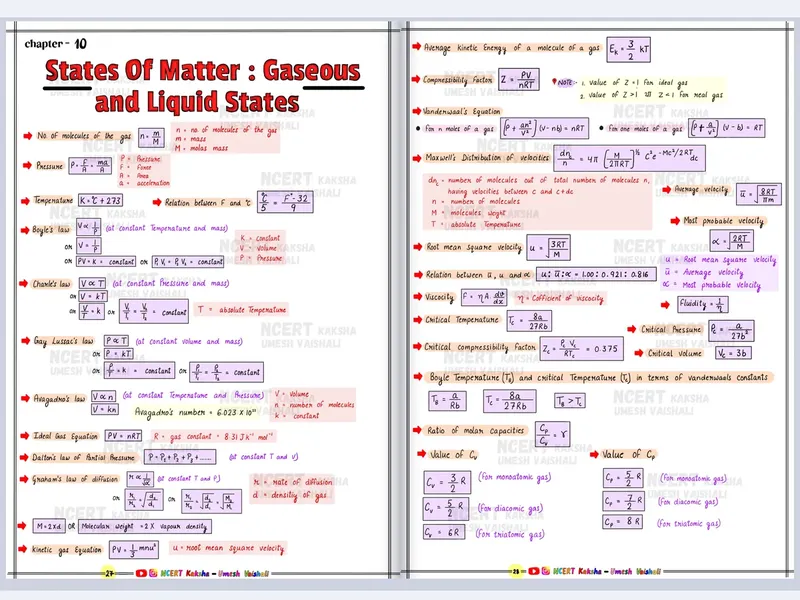
10. States of Matter: Gaseous and Liquid StatesChemistry
Boyle's, Charles's and Avogadro's laws, Ideal gas equation, Graham's law, Van der Waals equation, Critical constants.
11. Adsorption and ColloidsChemistry
Absorption and adsorption, Freundlich isotherm, Types of colloids, Tyndall effect, Dialysis, Gold number.
12. Chemical EquilibriumChemistry
Law of mass action, Kp and Kc, Van't Hoff equation, Dissociation constants, Henderson equation, Hydrolysis of salts.
13. Nuclear Chemistry and RadioactivityChemistry
Isotopes, isobars and isomers, Magic numbers, Binding energy, Half-life, Nuclear fission and fusion.
14. Basic Principles of Organic ChemistryChemistry
IUPAC naming, Functional groups, Resonance, Estimation of elements, Suffix and prefix tables.
15. HydrocarbonsChemistry
Alkane nomenclature, Wurtz reaction, Kolbe's reaction, Friedel-Crafts reactions, Common names.
16. Chemistry in Everyday LifeChemistry
Drugs and medicines, Analgesics, Antibiotics, Soaps and detergents, Antacids, Antihistamines.
1. The Living WorldBiology
Biodiversity, Binomial nomenclature, Rules of nomenclature, Taxonomic categories.
2. Systematics of Living OrganismsBiology
Taxonomy and classification, Three domains of life, Five kingdoms, Monera, Protista and Fungi, Viruses, viroids and prions.
3. Kingdom PlantaeBiology
Algae, Bryophytes, Pteridophytes, Gymnosperms, Angiosperms, Double fertilisation.
4. Kingdom AnimaliaBiology
Levels of organisation, Symmetry, Germ layers, Coelom, Segmentation, Notochord.
5. Cell Structure and OrganizationBiology
Centrosome and centrioles, Nucleus, Chromosome structure, Microbodies.
6. BiomoleculesBiology
Primary and secondary metabolites, Protein structure, Polysaccharides, Nucleic acids, Enzymes, Enzyme classification.
7. Cell DivisionBiology
Cell cycle phases, Mitosis stages, Cytokinesis, Meiosis, Significance of mitosis.
8. Plant Tissues and AnatomyBiology
Meristematic tissue, Permanent tissues, Xylem and phloem, Tissue systems, Stomata, Dicot and monocot root.
9. Morphology of Flowering PlantsBiology
Root and its regions, Stem, Types of leaves, Venation, Phyllotaxy, Inflorescence.
10. Animal TissueBiology
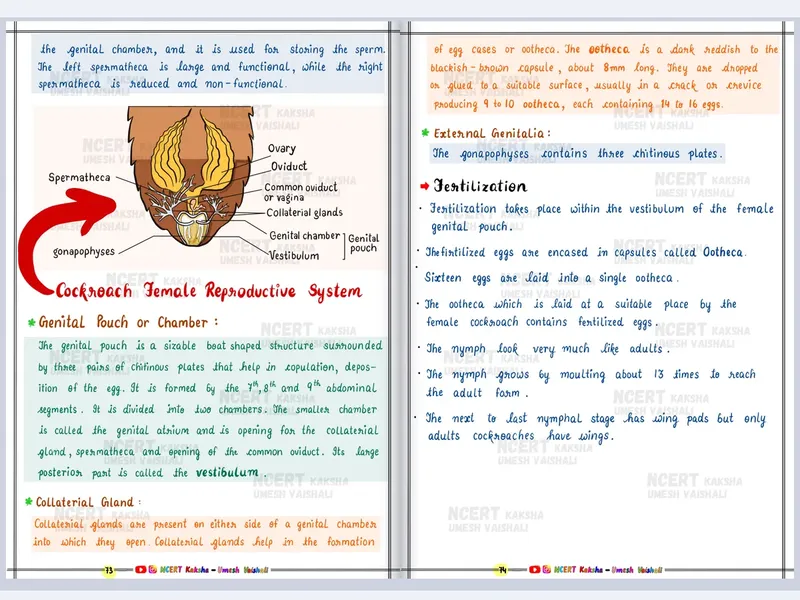
11. Study of Animal Type: CockroachBiology
Circulatory system, Excretory system, Male reproductive system, Female reproductive system, Ootheca and nymph.
12. PhotosynthesisBiology
Priestley's experiment, Chloroplast, Pigments, Light reaction, Calvin cycle, C4 pathway.
13. Respiration and Energy TransferBiology
Glycolysis, Fermentation, Citric acid cycle, Electron transport system, Oxidative phosphorylation, Respiratory quotient.
14. Human NutritionBiology
Teeth, Salivary glands, Stomach, Small intestine, Villi.
15. Excretion and OsmoregulationBiology
16. Skeleton and MovementsBiology
Muscle contraction, Sliding filament, Skull and bones, Vertebral column, Ribs and girdles, Joints and disorders.
1. Units and MeasurementsPhysics
Absolute and mean error, Percentage error, Errors in sums and products, Experimental error, SI base quantities.
2. Mathematical MethodsPhysics
Resultant of two vectors, Direction of resultant, Dot product, Cross product, Area of parallelogram.
3. Motion in a PlanePhysics
Unit and position vectors, Dot and cross product properties, Projectile motion, Uniform circular motion, Conical pendulum.
4. Laws of MotionPhysics
Momentum and impulse, Conservation of momentum, Limiting and kinetic friction, Inclined plane, Car on a banked road.
5. GravitationPhysics
Kepler's laws, Universal law of gravitation, Variation of g, Satellites, Escape velocity.
6. Mechanical Properties of SolidsPhysics
Stress and strain, Hooke's law, Young's modulus, Bulk and rigidity modulus, Poisson's ratio, Elastic energy.
7. Thermal Properties of MatterPhysics
Temperature scales, Thermal expansion, Calorimetry, Thermal conductivity, Stefan's law, Newton's law of cooling.
8. SoundPhysics
Wave equation, Speed of sound, Beats, Doppler effect, Vibrations of air columns.
9. OpticsPhysics
Mirror formula, Snell's law, Lens formula, Prism, Microscope and telescope, Interference.
10. ElectrostaticsPhysics
Coulomb's law, Electric field, Gauss law, Electric potential, Dipole, Capacitors.
11. Electric Current Through ConductorsPhysics
Ohm's law, Resistivity, Drift velocity, Kirchhoff's laws, Wheatstone bridge, Potentiometer.
12. MagnetismPhysics
Biot-Savart law, Ampere's circuital law, Lorentz force, Cyclotron, Bar magnet, Curie law.
13. Electromagnetic Waves and Communication SystemPhysics
Displacement current, Maxwell's equations, Energy density of waves, Speed of EM waves, Range of a transmitter.
14. SemiconductorsPhysics
Energy band gap, Zener diode, Transistor gains, Intrinsic and extrinsic types, Logic gates.
Test yourself with lines from the book
Eight quick questions, taken straight from the book.
More subjects, more free gifts
These are digital downloads, emailed to you after your order is delivered.
Choose another pack
See the book on video
From our YouTube channel · Tap for sound
real pages, real notes
See it on video
The team behind these notes

We teach Class 9 to 12 students on our YouTube channel. These notes are written by IITians, NITians and NEET toppers.
Academic records- Topper, Class 10
- Topper, Class 12
- NITian, cracked JEE Mains
- IIT JAM AIR 621
- Graduation topper, BSc PCM
- District topper
An investment in your child's future
Good notes do more than help with one exam. What your child learns and scores in school stays with them for years.
Clear, focused notes help students revise properly and score higher in school exams.
Strong basics now make the next exams much easier, and those marks matter long after school.
When marks go up, students start believing in themselves, and it shows in everything they do.
Talk to a real person first
Not sure which pack your child needs, or whether it matches their school? Ask us on WhatsApp before you order.
Ask on WhatsAppWhat students say
What 197 reviews tell us
Loved: fast revision, follows NCERT/CBSE, easy to read. The 44 students who mention "helpful" or "revision" rate it 4.6★ on average.